Community Sponsorship
Providing Platforms for School Living Art
Take a minute to write an introduction that is short, sweet, and to the point. If you sell something, use this space to describe it in detail and tell us why we should make a purchase. Tap into your creativity. You’ve got this.
Minnesota School Districts

Art Classes Design Green Wall
Program Available Now - In-person
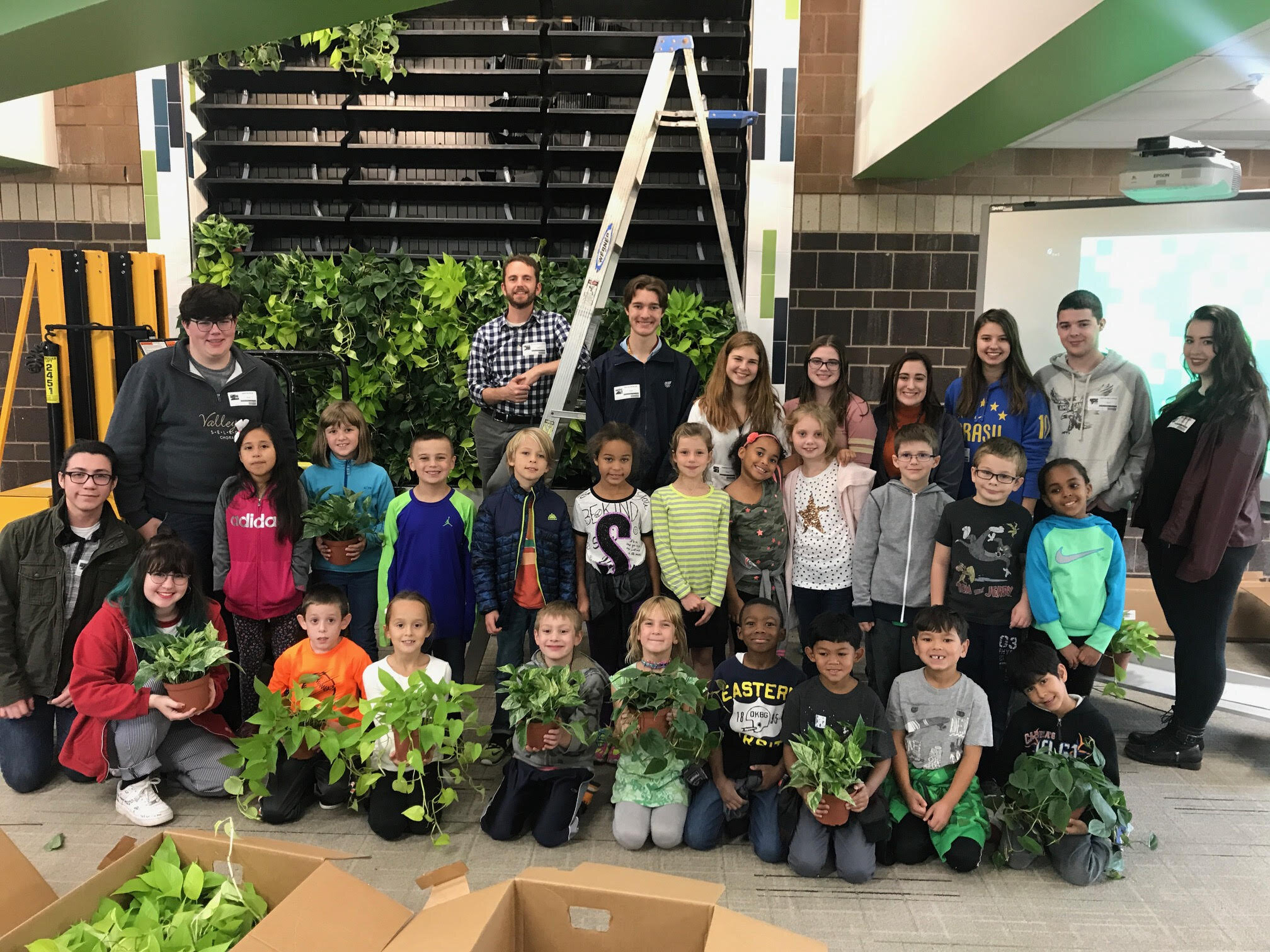
This program combines environmental education and STEM to help students design and install a living wall. Students can create their own living wall portraits to take home.
No Cost to Schools

Green Wall is Displayed as Public Art
Coming Fall 2023
Through STEM, students fabricate and program a vertical garden air filtration system. Each tower has a built-in fan system and computer software to biologically improve air quality. Students build and program the bio-filter tower for their classrooms.
No Cost for System, Plants, nore Installation

Sponsor Covers Plant Care
Program Available Now - in Person
Moss makes it possible to put nature onto walls without the need of irrigation. Students learn about the human connection to nature in the indoor environment by designing and creating their own moss wall. Students can also create their own moss wall portraits.
Typical Cost: $250 - $300/Month
Working With Minnesota School Districts
Through a series of project-based learning strategies in combination with a vertical garden program, our Artist in Residency curriculum provides students with passive indoor exposure to nature while also engaging them with activities related to with science, technology, engineering, art, and math (STEAM) fields. The outlined curriculum for the vertical garden artist in residency workshop utilizes a simple plant-growing lab to create an environmental education experience. Whether built on or within a preexisting building wall or freestanding, bringing nature indoors in this way creates an intimate, ongoing exposure to living plants regardless of outdoor conditions and does not significantly reduce usable floor space.
Throughout the entirety of the program, students explore nature’s role in STEAM fields through presentation and project-based learning opportunities. The students use scientific concepts and methods from plant biology, capillary action, and plant care. The engineered plant container for the green wall (created by computer-aided drafting technology and 3-D printing) highlights for students some of the key technologies that underlie the vertical garden system. Students apply engineering, mathematical, and geometrical principles to design and fabricate the planters and living walls and determine their size and plant populations. Finally, beyond technical considerations, students are directly engaged in the creative and artistic process of converting abstract concepts into built, functioning artifacts.

Students Design
Part one of the workshop provides students with an opportunity to learn how vegetation is brought indoors through methods related to STEAM. Students are given an interactive 15-min presentation exploring how plants are used in architecture, and how the creative process is the navigating tool for developing a green wall. This introductory presentation leads to experiments and hands-on learning.
Partners Display
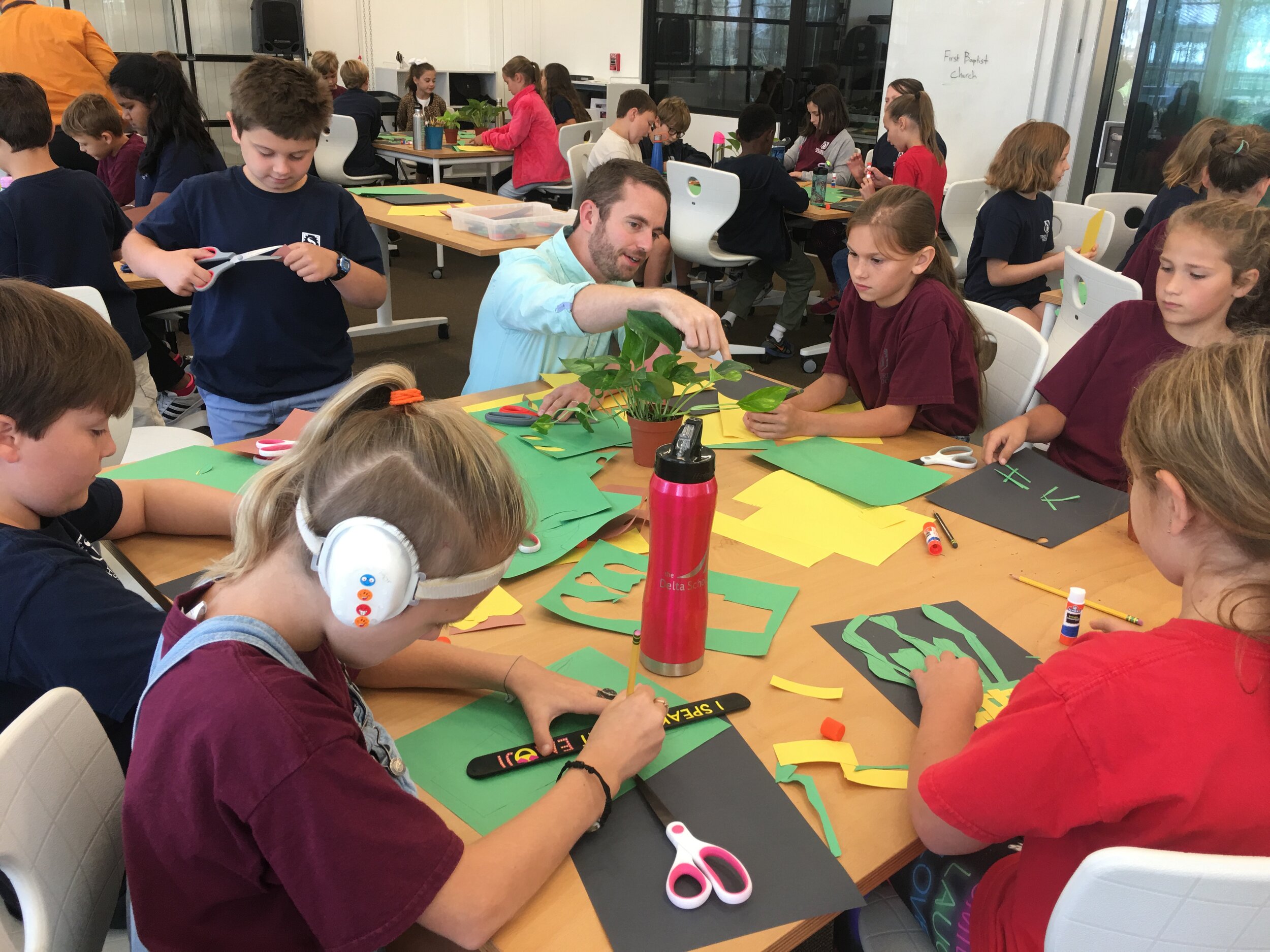
Once the presentation is completed, students are introduced to physical attributes of interior plants. They study plant characteristics including form, color, texture, and scale. Students interpret these characteristics by designing a small-scale multimedia collage utilizing construction paper (in colors similar to the plants), drawing utensils (to simulate foliage textures), and adhesive. The objective is for students to understand that each plant have different characteristics and those elements are used to create a design for the living wall.

Free For the Students
After students complete their collages, they then break into groups and develop a planting plan. If there is more than one green wall to create, groups may be divided based on the number of installations. If there is only one green wall, the students participate in a design competition. All learners are encouraged to consider the characteristics of plants, employ pertinent mathematical/geometrical concepts for pattern-making, and collaborate in a creative process throughout all stages of the project.

Free Installation for Partners
In part three of the workshop, students may begin the formal fabrication the green wall(s) and subsequent plant installation. Some participating schools may not have the resources or requisite student skill sets to allow for the fabrication process to occur in the classroom. Alternatively, a carpenter, a skilled volunteer, or a living wall specialist could prefabricate the green wall(s), and the students begin their work with the installation of the plants that are represented in their respective planting plans.
Funded By 2 Year Plant Servicing by Partner
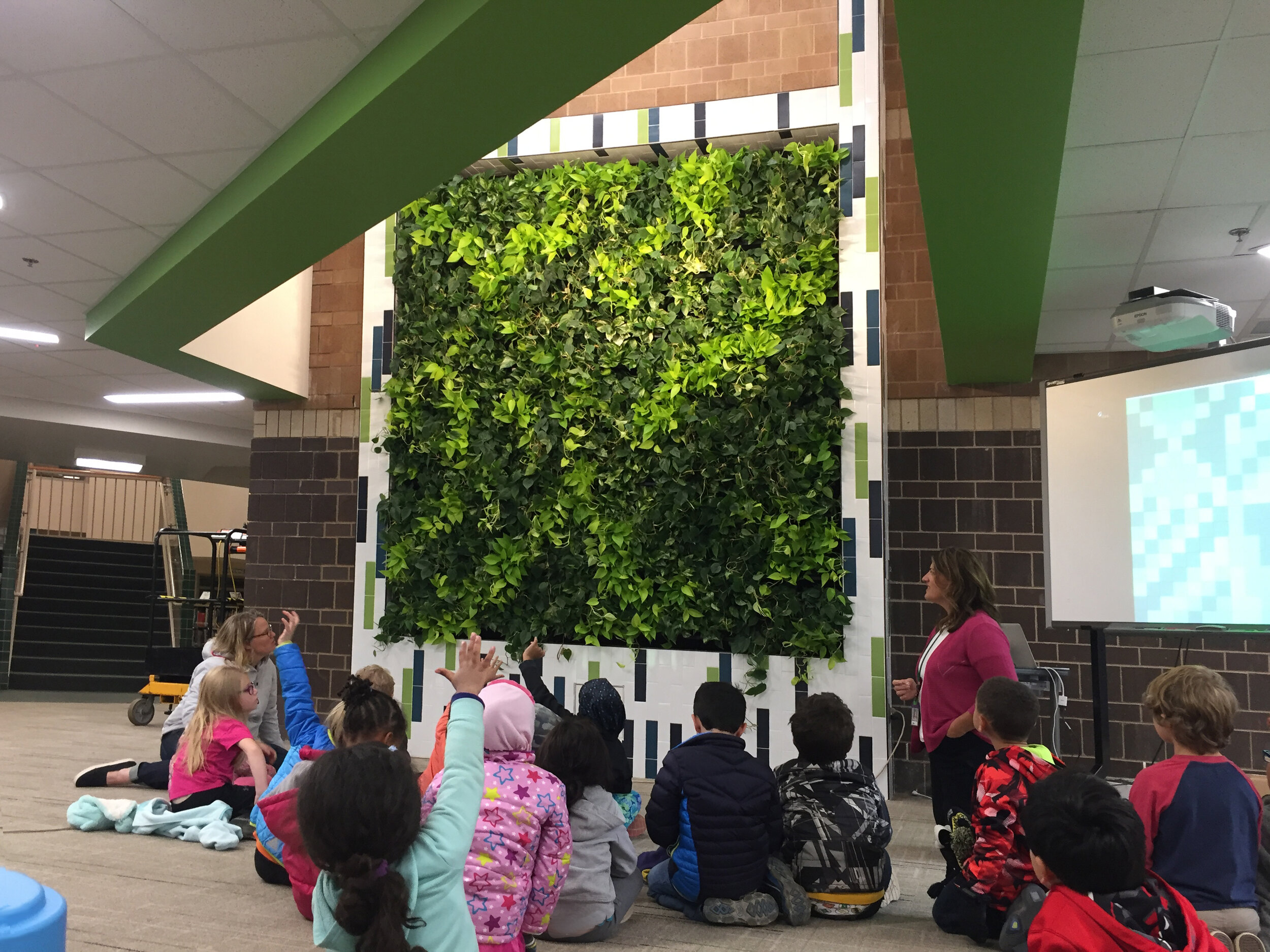
Once installation is completed, students will have learned about green wall design and fabrication processes and will understand the relationship between the two-dimensional design plan (Part II) and the finished installation.